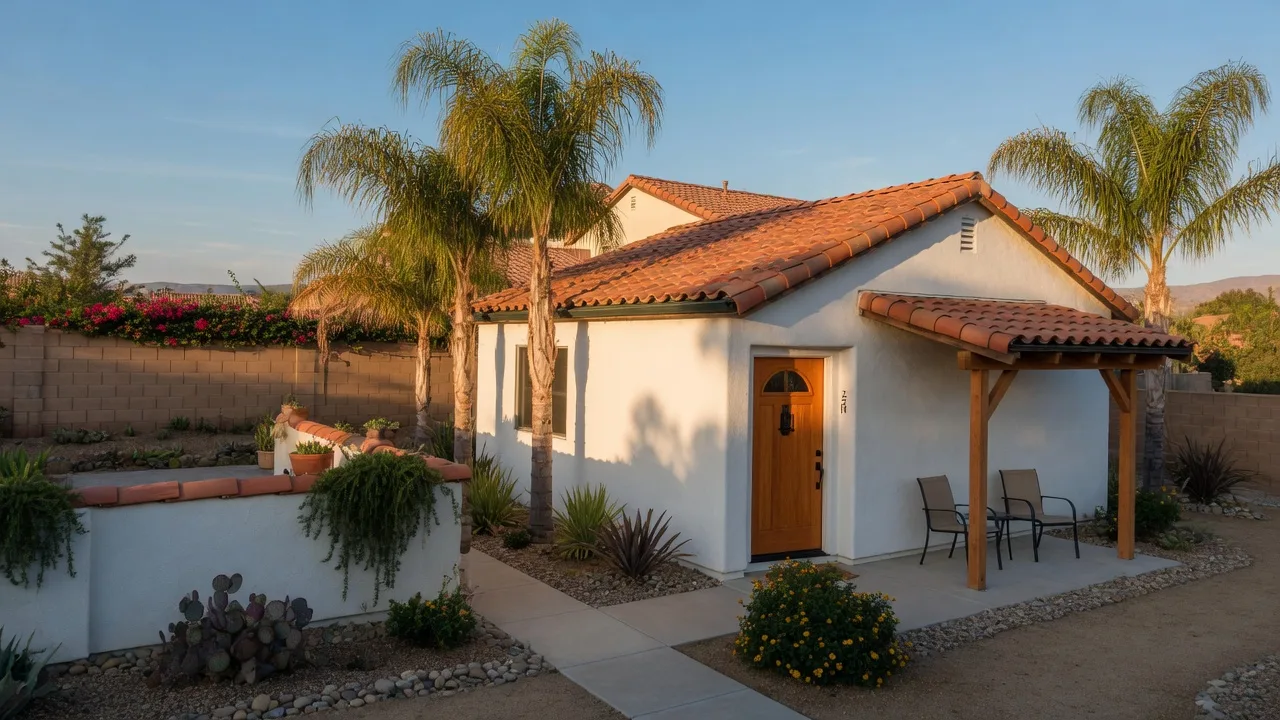
More Murrieta homeowners are asking us about ADUs than ever before. The idea is simple: add a small, fully equipped home to your property and use it for rental income, family space, work, or guests. The decision is rarely simple, though: city rules, construction costs, property tax questions, and, for many communities, HOA requirements all shape whether a project makes sense.
Laura Holbert and Cheryl Shadden of Team Integrity Realty take an education-first approach to this kind of question. We are not builders or city planners, and the specific numbers here can change, so always confirm the current rules before you plan. What we can do is explain how ADUs generally work in Murrieta, what they tend to cost, how they can affect home value, and the questions to ask before you commit. Our Buying Guide and home valuation page put this in the broader context of what a home is worth and what buyers actually pay for.
What Is an ADU, and Why Do Murrieta Homeowners Care?
An ADU is a second dwelling unit on a single-family lot. The common forms are an attached unit connected to the main house, a detached unit in the backyard, and a junior ADU (JADU), a smaller unit created inside the existing home. All three have their own kitchens, bathrooms, and entrances.
In our typical price range of roughly $600,000 to $900,000, the monthly payment matters for most buyers, and the math on a rental unit matters too: a permitted ADU that rents at market rate can offset a meaningful share of a mortgage payment. It can also keep a family together in one place, which is why we discuss ADUs with multigenerational buyers and with families who are not quite ready to buy or sell yet. If that sounds like you, our not ready yet page is written for exactly this stage.
Murrieta's Rules: Size, Setbacks, and Parking
Under current state law and the city's published guidelines, Murrieta approves ADUs by right through a building permit, with no minimum lot size required. You do not need a special zoning review, but you do need a permit, a plan, and code-compliant construction.
As of the city's current published guidelines, the key limits are:
- A detached ADU may be up to 1,200 square feet with a 16-foot height limit.
- An attached ADU may be no more than 50% of the main residence's floor area, capped at 1,200 square feet.
- A junior ADU may be up to 500 square feet, created within the existing single-family home.
- A single-family lot may generally have one ADU plus one JADU.
- Side and rear setbacks are typically 4 feet, following state minimums; front setback rules of the zone can still apply.
- Parking rules vary: often one on-site space is required, but common exemptions include converting an existing garage or building within half a mile of public transit.
State law generally expects owner occupancy of either the primary home or the ADU on single-family lots, with specific exemptions. Rules change, and your property may have its own conditions, so verify the current requirements with the City of Murrieta before you plan around any of these numbers.
What Does an ADU Cost to Build?
Costs vary widely. Statewide estimates in 2025 and 2026 commonly put the all-in cost of an ADU in California in the low six figures, roughly $150,000 to $400,000 depending on size, finishes, and site conditions, with many projects landing in the $200 to $450 per square foot range. A garage conversion is usually the most affordable route, and prefabricated units can fall in the mid-range. Site work, utility connections, permits, and upgrades add up quickly, and the same unit can cost very different amounts on different lots.
Get three detailed bids and compare what is included in each. Financing is a conversation worth having early: many owners use home equity, and renovation loans can work for the right project. Run your own numbers on our mortgage calculator to see how rental income could change what feels comfortable.
How Much Value Can an ADU Add?
Industry research commonly estimates that a well-built, permitted ADU can add roughly 10% to 35% to a home's value in housing-scarce markets like Southern California, with the National Association of REALTORS citing about 35% higher pricing for comparable homes with ADUs. The range matters more than the top number: appraisers value ADUs by comparing them to similar properties and weighing income potential, so a permitted unit with a real rental history appraises far better than an unpermitted one.
If you are trying to understand your current home's value before or after an ADU, start with our guide to what your home is really worth, then request a no-obligation valuation from us. We look at your property, your neighborhood, and the recent sales that a lender's appraiser would rely on.
Five Ways an ADU Might Fit Your Family
1. Rental income. A detached unit can become a steady rental, and for buyers who want income potential, an existing ADU is a genuine advantage. Tell us if that motivates you, and we will search for properties with a unit or the room to add one.
2. Multigenerational space. A parent or grown child close by, but with their own front door, can change family life for the better. It is one of the most common reasons our clients build, and it pairs naturally with downsizing conversations for the generation above.
3. A home office or studio. A dedicated workspace a few steps from the kitchen is a quiet upgrade to daily life.
4. Rightsizing without moving. Some homeowners build a small ADU, move into it, and rent or sell the main house later. It is a creative version of the rightsizing we do with empty nesters, and it is worth a conversation before you list either unit.
What to Check Before You Build
Start with your homeowners association if your community has one. Many Murrieta neighborhoods, which you can explore in our neighborhood guides, have CC&Rs that include design review, and HOA approval is separate from the city's building permit. Read the rules and talk to the board before you pay for plans.
Talk to your property tax adviser and your insurance agent next. A new dwelling can trigger a supplemental property tax assessment, and though state law provides some exemptions for newly created units, the details matter. Our guide to property taxes and Mello-Roos explains how assessments work here. Your homeowners policy will also need an update, and if you plan to rent the unit, landlord coverage is a different product.
Plan for utilities. A separate meter for water and electric makes the rental math cleaner, but connection fees and site work should be in your bids. Hire a licensed contractor, pull the permits, and do not close the project until the city signs off. An unpermitted unit is a liability on the next sale, not an asset.
Our Take
An ADU is a real project with real costs, and it is not right for every property or every family. Start with your goals, not with a floor plan. When you eventually sell, a permitted ADU widens your buyer pool, because families, investors, and income-minded buyers all ask about second units; our Market Report and Selling Guide can show how homes with ADUs compare in your neighborhood. Whether you want income, family space, or a path to rightsizing on your own lot, we would rather help you think it through early than sort it out mid-project.
Thinking About an ADU on Your Murrieta Property?
We help homeowners connect the dots between a property decision and their bigger plans. Call Laura at (951) 704-4635, or book a time to talk it through. No obligation, just honest guidance.
Laura Holbert · CA DRE# 01932682 · Cheryl Shadden · CA DRE# 01932888
Related Resources

Laura Holbert
Real Estate Broker, REALTOR® · CA DRE# 01932682 · Certified Negotiation Expert (CNE)
(951) 704-4635 · Laura@TeamIntegrityRealty.com

Cheryl Shadden
Real Estate Broker, REALTOR® · CA DRE# 01932888 · Certified Negotiation Expert (CNE)