How to Price Your Murrieta Home: Why Your Initial Pricing Strategy Matters
By Laura Holbert · April 10, 2026 · Updated September 1, 2026 · 10 min read
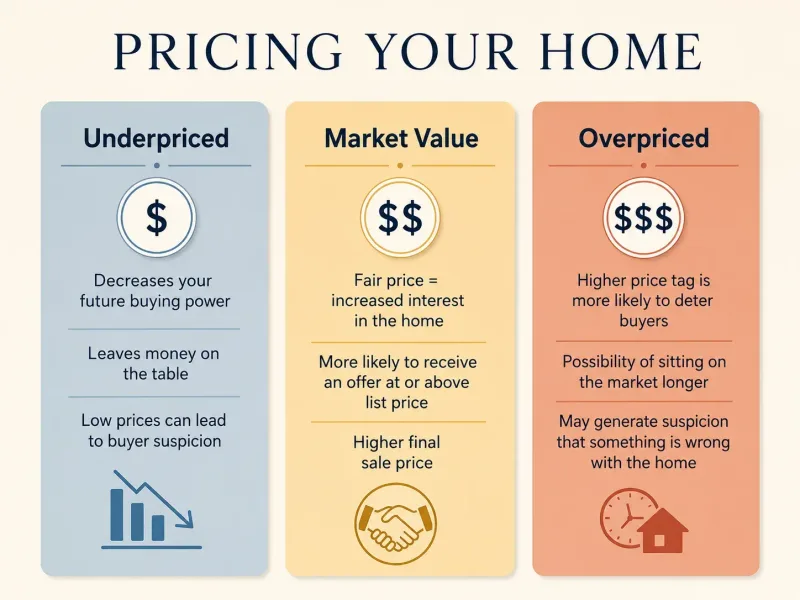
One of the most important decisions a seller makes is how to position the home when it first enters the market. New listings may receive significant attention from buyers and agents who are already watching for homes that meet their criteria, which makes the initial pricing strategy especially important.
But pricing is not something we set once and forget. Buyer response, competing inventory, pending sales, price reductions, showing activity, feedback, and changing market conditions can all provide useful information after the home launches.
How Important Is the Early Listing Period?
The early period after a listing launches can provide valuable information about how buyers are responding to the home's price, presentation, location, and competition.
The amount and timing of buyer activity varies by price range, property type, neighborhood, season, financing environment, inventory, and overall market conditions. That is why, when we price a Murrieta home, we look at the specific market position rather than relying on a single rule about a fixed number of days. If you are wondering when to list, our article on the best time to sell looks at how seasons affect buyer demand in Murrieta.
What Can Happen When a Home Is Priced Too High?
Pricing significantly above what current buyers are willing to pay can reduce showing activity and buyer engagement.
Possible consequences may include longer market time, fewer showings, repeated price reductions, weaker negotiating leverage, or buyers comparing the home unfavorably with competing properties.
That does not mean every home with longer market time was overpriced. Condition, location, price range, seasonality, financing conditions, buyer demand, property uniqueness, and competition can all affect how quickly a home sells.
Overpricing can create challenges, but every property and market is different.
Extended market time and repeated price reductions can affect buyer perception and may weaken a seller's negotiating position, although the outcome varies by property and market conditions.
What About "Testing the Market" With a Higher Price?
Some sellers are tempted to begin substantially above the supported market range because they believe they can always reduce the price later.
That approach can carry risk because buyers compare homes with competing inventory from the beginning. A home that appears significantly overpriced may receive less engagement while buyers pursue alternatives.
That does not mean a seller should automatically choose a low price. The goal is to begin with a strategy that is supported by the current market and aligned with the seller's objectives.
Is Pricing at or Below Market Value Always Best?
Different pricing strategies may make sense in different markets.
In some situations, pricing near the most supportable market range may help maximize buyer exposure. In other circumstances, a different strategy may be appropriate based on the property, competition, inventory, seller timeline, and current buyer behavior.
Pricing slightly below expected market value can be a deliberate strategy in some situations, but it should not be treated as a universal rule or a guarantee of multiple offers.
Does a Well-Priced Home Create Urgency?
When buyer demand and market conditions support it, an appropriately positioned home may encourage buyers to act more decisively because they recognize the property is competing effectively with other available options.
How Do We Recommend an Initial List Price?
Laura & Cheryl do not determine price from one automated valuation or one comparable sale.
Our analysis may consider recent closed sales, current competing listings, pending sales when useful information is available, recent price reductions, property condition, upgrades and improvements, lot, location, views, and neighborhood characteristics, price range, current inventory, buyer demand, days on market, financing conditions, and seller timing and goals.
The recommended range should be supported by current market evidence while also considering how buyers are likely to compare the property with available alternatives.
Why Murrieta Pricing Must Be Neighborhood-Specific
Murrieta is not one uniform real estate market. A home in Alta Murrieta may compete with a very different group of properties than a home in Bear Creek, The Colony, Four Seasons, Murrieta Oaks, La Cresta or Tenaja.
Property type, lot size, acreage, HOA structure, community amenities, age-qualified community status where applicable, upgrades, condition, views, location within the community and the current competing inventory can all affect how buyers compare one home with another.
That is why Laura & Cheryl do not rely only on a citywide median price or a simple price-per-square-foot calculation. Our monthly market report tracks those citywide numbers, but we identify the most relevant comparable sales and current competing homes for the individual property and evaluate how that home is likely to compete in its specific part of the Murrieta market.
Pricing Is Not "Set It and Forget It"
The initial list price matters, but professional pricing strategy does not end when the home goes live.
Laura & Cheryl continue monitoring the home's position in the market after launch. We watch new competing listings, competing price reductions, pending sales, closed sales, showing activity, showing feedback, online buyer response, open-house response when applicable, offer activity, changes in inventory, buyer behavior, and financing or market changes.
One piece of feedback does not automatically mean the price should change. We look for patterns.
If the market consistently sends a message that the home is not competing as expected, we explain what the data is showing, discuss the available options with the seller, and recommend a strategy.
This ongoing monitoring is a core part of how we work with Murrieta home sellers. Pricing is not a number we choose once. It is a market-position strategy that we continue to evaluate throughout the listing. If you plan to sell and buy your next home at the same time, getting this strategy right matters even more; our guide on sell and buy at the same time walks through the coordination.
Is a Price Adjustment a Sign That Something Went Wrong?
Not necessarily. Markets change, new competition enters, buyer behavior shifts, and information becomes available after a listing launches.
The important question is whether the current price remains supported by the market.
If a price adjustment becomes appropriate, the goal is to make a deliberate decision based on market evidence rather than allowing the listing to drift without a strategy.
Do Online Home-Value Tools Set My List Price?
Automated valuation tools can provide a general reference point, but they may not account accurately for condition, remodeling quality, views, lot characteristics, location within a neighborhood, competing listings, seller concessions, or current buyer behavior.
A pricing analysis should combine market data with property-specific evaluation.
Do Buyer Search Ranges Affect Pricing?
Buyer search ranges can also influence pricing strategy. Many buyers search within specific price bands, so even a relatively small price difference can affect which searches include a property.
That does not mean a home should be priced solely to fit a search bracket. It is one of several factors to consider when positioning the listing.
How Important Is Buyer Feedback?
Seller decisions should not be based on one buyer's opinion.
However, repeated feedback from multiple showings, especially when it aligns with changes in competing inventory, online engagement, or offer activity, can provide useful information about how the market perceives the home.
Laura & Cheryl help sellers separate isolated comments from meaningful patterns.
How Does Home Condition Affect Pricing?
Price cannot be evaluated separately from condition.
Buyers compare the home not only with recent sales but with what they can purchase today. A home requiring significant updates may compete differently from a renovated property even when the homes have similar size and location.
Preparation, condition, pricing, and marketing work together. That is why we pair every pricing conversation with honest guidance on what to address before the home hits the market. See our Pre-Sale Home Preparation page for a full checklist.
Is List Price the Same as Market Value?
No. List price is the seller's asking price and marketing position. Market value is ultimately influenced by what informed, willing buyers are prepared to pay under current conditions.
The final sales price can be affected by competition, financing, appraisal, property condition, seller credits, contingencies, and other negotiated terms.
What About Appraisal Risk?
Pricing strategy should also consider potential appraisal risk when a buyer is financing the purchase.
An accepted offer above recent comparable support does not automatically mean the property will appraise at that amount.
If appraisal risk exists, we help the seller evaluate the complete offer terms, financing, appraisal contingency, and available comparable evidence.
The Bottom Line
Initial pricing is one of the most important decisions in a successful home-sale strategy. Pricing works together with preparation, marketing, presentation, negotiation, and transaction management.
Our goal is to help you make an informed pricing decision that supports your financial and timing objectives while responding to current market conditions.
We cannot guarantee a particular sales price, number of offers, or market time. What we can do is analyze the market carefully, position the property thoughtfully, monitor buyer response, communicate what the data is showing, and recommend adjustments when appropriate.
Frequently Asked Questions About Pricing Your Murrieta Home
How do I know what price to list my Murrieta home for?
We build a recommended range from current market evidence. Our analysis combines recent closed sales, active competing listings, pending sales, property condition, lot and location, and current buyer demand, and then we compare how buyers are likely to view the home against what else is available today.
Should I price my home higher so I have room to negotiate?
Not necessarily. Beginning well above the supported range can reduce engagement while buyers pursue alternatives. We recommend starting with a strategy that is supported by the market and aligned with your objectives, rather than a high price you plan to negotiate down later.
Is it bad to reduce the price after listing?
Not automatically. Markets change and new competition enters. If an adjustment becomes appropriate, the goal is a deliberate decision based on market evidence rather than letting the listing drift.
How quickly should I consider a price adjustment?
We do not change price on a single showing. We look for patterns across showing feedback, competing inventory, online engagement, and offer activity before recommending any adjustment.
Does a home get the most attention when it first lists?
New listings often receive significant early attention, but the amount and timing of activity varies by price range, neighborhood, season, and market conditions. We use early response as information, not as a fixed deadline.
Should I price below market value to create multiple offers?
It can be a deliberate strategy in some situations, but it is not a universal rule and never a guarantee. We discuss whether the property, competition, and current buyer behavior support that approach.
Do online home-value estimates determine my list price?
No. Automated tools can provide a general reference point, but they may not account for condition, updates, views, lot, location within a neighborhood, or current buyer behavior. We combine market data with a property-specific evaluation.
How does home condition affect pricing?
Price cannot be separated from condition. Buyers compare your home with what they can purchase today, so a home needing updates may compete differently than a renovated property of similar size and location.
Why can two similar Murrieta homes sell for different prices?
Two homes with similar square footage can compete very differently. Condition, remodeling, lot characteristics, location within the neighborhood, views, floor plan, current competition, buyer demand, financing, seller credits, contingencies and other negotiated terms can all affect the final result. That is why we evaluate the individual property and its direct competition rather than relying on one price-per-square-foot number.
What happens if my home does not appraise?
If appraisal risk exists, we help you evaluate the full offer terms, financing, appraisal contingency, and available comparable evidence so you can make an informed decision about how to proceed.
How do Laura & Cheryl know whether the pricing strategy is working?
We continue monitoring after launch. We watch showing activity and feedback, competing listings and price reductions, pending and closed sales, online buyer response, and offer activity, and we look for meaningful patterns before recommending any change.

Laura Holbert
Real Estate Broker, REALTOR® · CA DRE# 01932682 · Team Integrity Realty
Thinking About Selling Your Home?
Let's have a conversation about pricing, preparation, and what to expect.