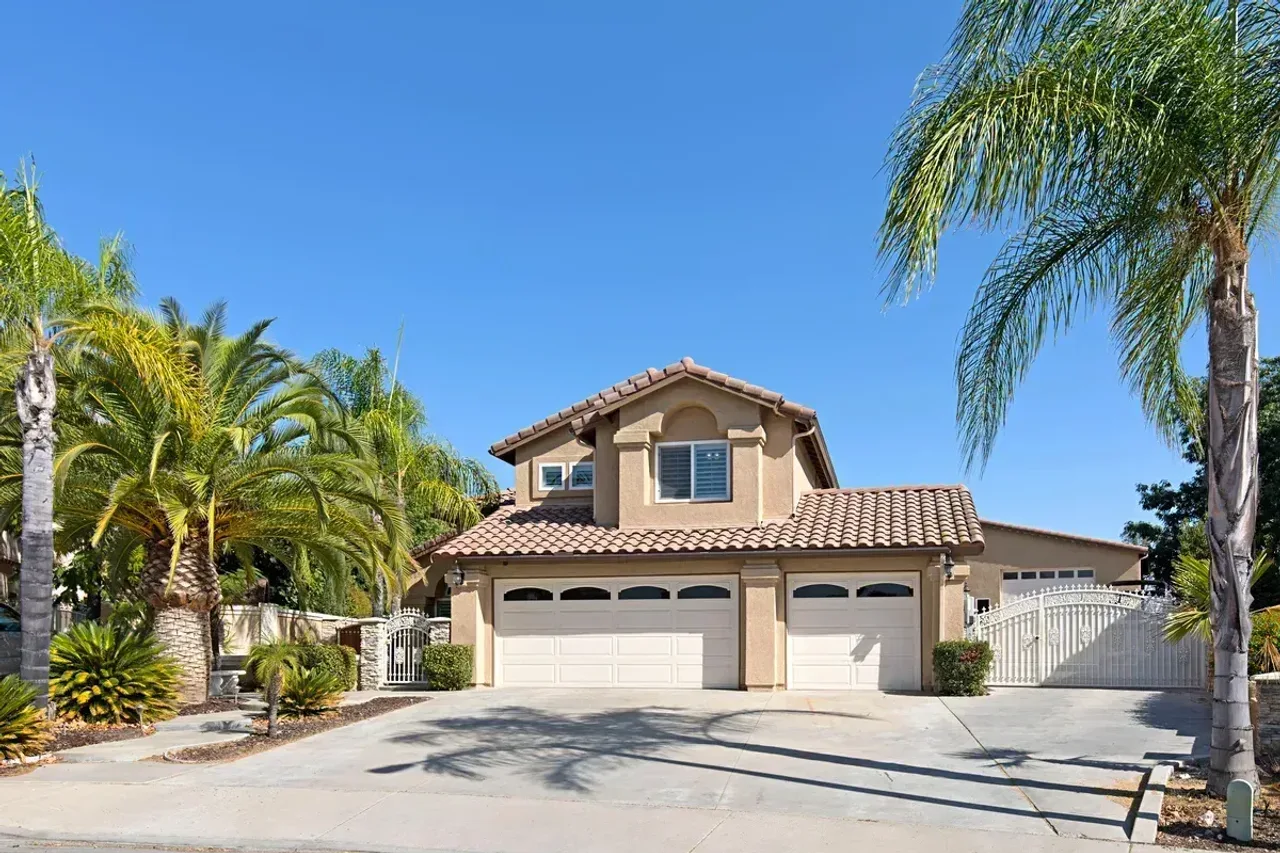
Seller Closing Costs in Murrieta, CA
The cost of selling a home in Murrieta, California is not one fixed percentage. Depending on the property and transaction, a seller may have expenses involving negotiated brokerage compensation, title and escrow services, Riverside County documentary transfer tax, HOA disclosure documents, required or customary disclosures, negotiated buyer credits, repairs and other property-specific costs. A seller may also see mortgage payoffs, liens, property-tax or HOA prorations, California real-estate withholding and other adjustments deducted from escrow proceeds. Those items affect the amount the seller receives at closing but are not all technically selling fees. That is why Team Integrity Realty prepares an estimated seller net sheet using the individual property, anticipated sale price and transaction assumptions rather than telling every seller to budget one generic percentage. This guide explains the major expenses and deductions Murrieta sellers may encounter and which items are fixed, negotiable, optional or property-specific.
Seller Costs at a Glance
The table below groups the likely seller-related items into four questions: what the item is, whether it is always required, and how it is determined. The answer for most items is: it depends on the agreement, the property, or the transaction. That is the point. A personalized seller net sheet is the most reliable way to estimate your own situation.
| Item | What It Is | Is It Always Required? | How Is It Determined? |
|---|---|---|---|
| Listing brokerage compensation | Negotiated professional fee for listing brokerage services | No universal rate | Listing agreement |
| Buyer-broker compensation concession | Potential negotiated seller concession toward the buyer's brokerage compensation | No | Purchase agreement / negotiation |
| Owner's title insurance | Title protection for the buyer against covered title issues | Depends on contract and local allocation | Title company / purchase agreement |
| Escrow fees | Settlement and escrow services | Usually transaction-related, but allocation varies | Escrow company / purchase agreement |
| Documentary transfer tax | Governmental transfer tax on taxable conveyances | Applies to taxable conveyances unless exempt | Official Riverside County calculation |
| HOA disclosure-document fees | Required association documents when applicable | Only if property is in applicable HOA or CID | Association / California law |
| Other HOA transfer-related charges | Property and community-specific charges at transfer | No | Association documents / contract |
| Natural Hazard Disclosure service | Third-party disclosure service commonly used to help prepare the NHD | The third-party service itself is not universally required | Provider / transaction |
| Home warranty | Optional service contract unless negotiated | No | Negotiation / plan selected |
| Repairs | Property and negotiation-specific repair work or credits | No universal amount | Seller decision / contract |
| Seller credits | Negotiated contributions toward eligible buyer expenses | No | Purchase agreement |
| Mortgage or HELOC payoff | Existing debt rather than a selling fee | If applicable | Lender payoff demand |
| Liens or judgments | Existing financial or legal obligations against the property | If applicable | Title / creditor |
| Property-tax or HOA prorations | Allocation of obligations between buyer and seller | Transaction-specific | Purchase agreement / escrow |
| California real-estate withholding | Tax withholding or prepayment where applicable | Depends on seller, transaction and exemptions | California FTB rules |
| Moving or preparation expenses | Costs to prepare and vacate the property | Optional and property-specific | Seller decisions |
No permanent dollar amounts are built into this table because none apply to every Murrieta sale. Your actual items and amounts come from the listing agreement, purchase agreement, property, HOA, title and escrow providers, loan payoffs and California law as applied to your transaction.
Selling Costs vs. Mortgage Payoff vs. Net Proceeds
Sellers sometimes treat everything deducted through escrow as one lump of closing costs. That mixes up three different categories of money. Separating them makes your estimated net proceeds much easier to understand.
Selling Costs
Expenses connected with completing the sale, such as negotiated brokerage compensation, title and escrow charges, applicable transfer tax, and certain disclosure or HOA expenses. These are the items most people think of when they ask, what does it cost to sell my home?
Existing Obligations
Your mortgage, HELOC, liens or other recorded obligations are not new costs created by the sale. They are existing debts that may need to be paid or otherwise resolved through escrow so title can transfer. They are paid from proceeds, but they are not new selling expenses.
Net Proceeds
Estimated net proceeds are generally calculated by starting with the sale price and subtracting applicable transaction expenses, payoffs, credits, adjustments and other amounts deducted through escrow. This is why a home selling for $800,000 does not mean the seller receives $800,000. What remains after all deductions is the estimated amount the seller may walk away with.
Listing Brokerage Compensation
Real estate brokerage compensation is negotiable. California law does not establish a standard listing commission percentage. The seller and listing brokerage agree in writing on compensation as part of the listing agreement. The amount or structure can depend on the services and agreement negotiated.
At Team Integrity Realty, the listing agreement clearly explains brokerage services, marketing responsibilities, listing term, compensation, seller responsibilities, other material terms. Before you sign, we review how we are compensated so there is no confusion about what you are agreeing to.
The California Department of Real Estate (DRE) provides current information about representation and compensation expectations. See the DRE's consumer alert on current real estate representation and compensation practices for background.
Does the Seller Have to Pay the Buyer's Agent?
No. The buyer and buyer's brokerage establish the buyer broker's compensation through their own written representation agreement. A buyer may request that the seller contribute toward some or all of that compensation as part of the purchase negotiation. The seller may accept, reject, counter or evaluate it together with all other offer terms. This is a potential negotiated seller expense, not an automatic fixed seller fee.
When evaluating a buyer-broker compensation request, sellers should consider the entire offer including purchase price, other seller credits, financing, contingencies, appraisal terms, closing date, possession, estimated seller net. A separate request for buyer-broker compensation may make financial sense under one set of circumstances and not another, which is why we review it as part of the complete offer.
Compare Services, Strategy and Fees Together
Brokerage compensation is one part of a seller's financial decision. When comparing listing services, sellers may want to evaluate pricing analysis, property preparation guidance, photography and presentation, marketing plan, availability, communication, offer analysis, negotiation, transaction management, escrow coordination, experience, and compensation. The lowest fee does not automatically produce the highest net proceeds, and the highest fee does not automatically produce the best result. Compare the actual services, agreement and strategy being offered, and decide what fits your property and goals. Our pricing strategy guidance explains how pricing decisions affect a home's market position and buyer response.
Owner's Title Insurance
An owner's title insurance policy generally protects the buyer against covered title issues that existed before the buyer acquired the property, subject to the policy's terms, conditions and exclusions. Who pays for the owner's policy can depend on the purchase agreement, local custom, negotiation, property and transaction. It should not be described as a legal requirement that every seller pay it.
The premium depends on the title company, policy, transaction and insured amount. There is no universal dollar figure. Team Integrity Realty and escrow or title can identify the anticipated charge when preparing the seller's estimated net sheet at the time of your transaction.
Escrow Fees
Escrow acts as a neutral holder and processor of funds, documents and instructions during the transaction. Escrow charges vary by company and transaction. The purchase agreement and escrow arrangement determine how costs are allocated. There is no universal rule that sellers always pay one fixed share.
The anticipated seller escrow charge should be obtained directly from the escrow provider and included in the transaction-specific net sheet. We coordinate with the escrow officer so the estimated charges are clear before you commit to a strategy.
Riverside County Documentary Transfer Tax
Riverside County's Assessor-County Clerk-Recorder currently states that documentary transfer tax on taxable conveyances is generally charged at $0.55 for each $500 or fractional portion of taxable real-property value, equivalent to $1.10 per $1,000. The Recorder also identifies circumstances in which transfers may be exempt or the taxable basis may differ. The exact amount should be calculated by escrow or title using the actual transaction and current Recorder requirements.
The City of Murrieta does not add a separate city transfer tax on top of the county documentary transfer tax; check current county and official requirements for your specific transaction.
Approximate calculation for illustration only. Actual taxable consideration, exemptions and Recorder requirements should be confirmed through escrow or title and the Riverside County Recorder. For example, a $500,000 taxable value would compute as $500,000 divided by $500 equals 1,000 units, times $0.55 equals roughly $550 (equivalent to $1.10 times 500).
See the official Riverside County Assessor-County Clerk-Recorder recording requirements for the current documentary transfer tax statement.
Property-Tax Prorations
Property-tax adjustments at closing are not the same thing as charging the seller a new property tax. Escrow allocates property-tax responsibilities according to the current tax bill, taxes already paid, closing date, purchase-agreement terms, delinquent amounts if any, other applicable adjustments. Depending on where closing falls in the tax cycle, the seller may receive a debit or credit through escrow. This is an allocation between the parties, not a fixed Murrieta percentage applied to every seller.
Properties can also have CFD or Mello-Roos, Landscaping and Lighting District assessments, and other parcel-specific assessments. These should be reviewed from the individual property-tax bill rather than assumed from a citywide rule. For eligible transfer scenarios, property-tax base rules can also be relevant; see our Proposition 19 guide for context.
As part of the closing process, the buyer/transferee generally completes and signs the Preliminary Change of Ownership Report (PCOR), with escrow or title commonly coordinating its submission with the deed. This is a closing-process step rather than an additional seller fee. See the California State Board of Equalization's change-in-ownership information for background.
HOA Disclosure Documents
If the property is in a California common-interest development, the seller may have statutory obligations to provide specified association information to the prospective purchaser. California Civil Code Sections 4525 and 4530 govern many of these disclosure requirements. Current California law allows an association to charge the seller a reasonable fee based on the association's actual cost of procuring, preparing, reproducing and delivering the required documents; the association must provide an estimate of applicable document fees when properly requested.
Required information can include governing documents, current financial information, regular and special assessments, unpaid amounts, certain unresolved violations, approved assessment changes, applicable rental restrictions, and other documents required by current law. Beginning in 2026, California law also added the most recent required exterior elevated-elements inspection report to the Section 4525 disclosure list where applicable.
Document-fee amounts are association-specific, so the actual association should be contacted for current pricing. See the official California Civil Code Article 2 (Sections 4525 through 4545), which includes both Section 4525 and Section 4530, governing transfer disclosures and association document fees.
Other HOA Charges at Transfer
In addition to statutory disclosure-document charges, an HOA or management company may identify other property- or association-specific amounts associated with a transfer, potentially including transfer processing, account status or demand information, unpaid dues, special assessments, fines or violations, other authorized association charges. Who is responsible for each amount can depend on governing documents, applicable law, purchase agreement, and negotiation.
Not every HOA charges a transfer fee, capital contribution, working-capital fee or demand fee, and those costs are not automatically the seller's responsibility. Review the specific HOA documentation and the purchase agreement for each community.
Natural Hazard Disclosure
California residential transactions can require a Natural Hazard Disclosure Statement identifying whether the property is within specified statutory hazard areas. Sellers commonly use a third-party natural-hazard disclosure company to help prepare the applicable report and supporting information. The cost of a third-party report depends on the provider and service selected. California law does not require every seller to purchase a fixed-dollar third-party report; the legal disclosure requirement and the optional use of a particular third-party report service are different issues.
For more context on required seller disclosures, see our California Seller Disclosures guide.
Home Warranty
A home warranty is not an automatic seller closing cost. Depending on the transaction, a seller may offer one in advance, agree to purchase one during negotiation, decline a buyer request, or not include one at all. Plan pricing and coverage differ. Whether a home warranty makes sense depends on the property, systems, buyer request, negotiation, coverage and cost. There is no universal price range that applies to every Murrieta sale.
Repairs and Repair Credits
Repairs are not a universal seller closing cost. A buyer may request repairs or a credit after inspections according to the purchase agreement. A seller may potentially agree, decline, counter, offer an alternative, or negotiate other terms. The appropriate response depends on property condition, contract, cost, market position, buyer and seller leverage, financing, appraisal requirements, and seller goals. We do not build a permanent repair allowance into every seller's estimated costs, because every property and every negotiation is different.
Seller Credits and Concessions
A purchase offer may ask the seller to contribute toward eligible buyer expenses, such as buyer closing costs, interest-rate buydown, repairs, buyer-broker compensation, other permitted expenses. The seller is not automatically required to provide a credit. A request should be evaluated as part of the complete offer and estimated seller net. Loan-program rules may limit or regulate certain concessions, so the specifics matter.
Your Mortgage Payoff Is Not a Selling Fee
For many sellers, the largest deduction from escrow proceeds is the payoff of the existing mortgage. But that does not mean the sale created a new expense equal to the mortgage balance. It is an existing debt secured by the property. The lender's payoff demand may include remaining principal, accrued interest, applicable lender charges, and other payoff-related amounts. Escrow obtains the official payoff information; do not use an online mortgage balance alone as the final payoff number.
HELOCs and Second Mortgages
If the property secures a home-equity line of credit, second mortgage, or other recorded financing, those obligations may need to be paid and released as part of the transfer. A HELOC can require special attention because an account with a zero balance may still have an open lien or available credit line. Escrow or title and the lender should determine the payoff and release requirements early in the transaction.
Liens, Judgments and Other Title Issues
A title search may identify financial or legal matters that need to be resolved before or through closing, such as tax liens, judgment liens, mechanic's liens, delinquent HOA amounts, recorded financing, and other title matters. Not every item is automatically paid in every sale; some matters may require payoff, release, dispute, subordination, or other resolution. Team Integrity Realty coordinates with title and escrow but does not provide legal advice concerning disputed liens or title claims. For legal questions, consult an attorney.
Solar Financing or Lease Obligations
Solar can affect seller proceeds when the system is financed, leased, subject to a power-purchase agreement, or secured by another obligation. Depending on the contract, the seller may need to consider payoff, assumption, transfer requirements, buyer qualification, documentation, and other contractual conditions. Do not assume solar automatically transfers to the buyer, and do not assume it must always be paid off. Review the actual solar agreement early so you understand what may be required.
Costs That May Occur Before Escrow
Not every expense associated with selling appears on the closing statement. Depending on the property and strategy, a seller may choose to spend money before listing on cleaning, decluttering, landscaping, repairs, paint, staging, storage, moving, specialty inspections, and other preparation. These are not automatic closing costs. Team Integrity Realty recommends evaluating whether an expense is likely to improve presentation, solve a material issue or otherwise support the strategy before spending money. See our Pre-Sale Home Preparation guide for how to think about these choices.
What Is California Real-Estate Withholding?
California Franchise Tax Board rules may require tax withholding from proceeds when California real property is sold unless an applicable exemption or other permitted treatment applies. Current FTB guidance provides multiple methods and potential exemptions. When no exemption applies, one method calculates withholding using 3 1/3% of the applicable sales price; an alternative method can use an estimated gain calculation under the FTB's rules.
Important: this withholding is generally a tax prepayment or credit. It should not automatically be described as an additional cost of selling; the amount withheld may be credited when the seller files the applicable California tax return. Possible exemptions or special treatment can apply for principal-residence qualification, loss or zero gain, certain entity circumstances, qualifying exchanges, installment sales, and other FTB rules. This page does not attempt to determine a seller's individual tax result; sellers should review Form 593 and consult escrow and a qualified tax professional when appropriate.
See the official California Franchise Tax Board instructions for Form 593, Real Estate Withholding Statement for current requirements.
Is Capital Gains Tax a Closing Cost?
Not in the same way as escrow, title or transfer-tax charges. The sale of real estate may create federal and/or California income-tax consequences depending on the seller's circumstances; potential factors include adjusted tax basis, purchase price, qualifying improvements, ownership period, occupancy, filing status, property type, depreciation, prior tax treatment, and applicable exclusions. Real estate agents do not determine the seller's individual income-tax liability. Consult a qualified tax professional regarding your individual tax situation. For a general overview, see our Capital Gains Tax Guide.
Costs Sellers Should Not Automatically Assume They Must Pay
Depending on the contract and transaction, the following should not be presented as automatic seller obligations:
- Buyer's brokerage compensation
- Buyer's closing costs
- Home warranty
- All inspection repairs
- Termite work
- Buyer's lender fees
- Buyer's lender title policy
- All HOA transfer-related charges
- Every recording fee
- Every natural-hazard service charge
- Buyer's appraisal
- Buyer's home inspection
Responsibility depends on contract, law, negotiation, financing requirements, and property-specific circumstances.
How Do You Estimate What You Will Walk Away With?
A seller net sheet estimates potential proceeds using information available before closing. The basic structure works like this:
Expected Sale Price
minus applicable deductions, including:
- Mortgage payoff
- HELOC or second mortgage payoff
- Negotiated listing brokerage compensation
- Negotiated buyer concessions
- Buyer-broker compensation concession if agreed
- Title charges
- Escrow charges
- Documentary transfer tax
- HOA charges
- Tax and HOA adjustments
- Repairs or credits
- Liens
- Solar obligations
- Other transaction-specific amounts
Equals Estimated Seller Net Proceeds
This is an estimate. The final settlement statement from escrow reflects the actual transaction, including updated figures and any changes negotiated along the way. We update your net sheet as actual transaction terms become known.
Do I Have to Wait Until I Accept an Offer to See My Net?
No. We prefer to discuss estimated seller proceeds before the seller commits to a listing strategy. A preliminary net sheet can help answer: is selling financially practical? How much equity may be available? How much could be used toward another purchase? Does the seller have enough proceeds for the next move? How would a lower or higher sale price affect proceeds? How would a seller credit affect the bottom line? The net sheet should then be updated as actual transaction terms become known.
Compare Offers by More Than Purchase Price
A seller should not compare two offers using purchase price alone. Offers can differ in seller credits, buyer-broker compensation request, repairs, financing, appraisal terms, contingencies, closing date, possession, rent-back, and other negotiated costs. An offer with a higher gross purchase price can potentially produce a lower seller net depending on other terms. Team Integrity Realty prepares side-by-side offer comparisons so the seller can evaluate both financial and contractual differences. Our Selling Guide walks through the full process from first conversation to closing.
Why Murrieta Seller Costs Can Differ by Property
Two Murrieta homes with the same sale price can have different selling expenses. The correct estimate starts with the actual property rather than a citywide percentage. For broader area context, see our current market report. Here are a few ways properties differ:
HOA Community
An HOA property may have association disclosure or transaction-related charges a non-HOA property does not. Fees and documents vary by association.
Special Assessments
Property-specific tax assessments, such as CFD or Mello-Roos, may affect escrow adjustments differently than properties without them.
Solar
A financed or leased solar system may create payoff or transfer requirements that vary by agreement.
Older Property
May have different repair or inspection considerations, and buyers may respond differently to condition-related requests.
Acreage or Rural Property
May involve septic, well or other property-specific investigations or negotiated expenses that differ from a conventional subdivision lot.
55+ Community
Age-qualified communities may have their own HOA documents, transfer procedures and property characteristics. See our Four Seasons, The Colony and The Knolls guides for examples.
Frequently Asked Questions About Seller Closing Costs in Murrieta
How much does it cost to sell a home in Murrieta?
There is no single percentage that accurately applies to every Murrieta seller; costs depend on brokerage agreements, escrow and title charges, the property, HOA, negotiated credits, payoffs and the final purchase contract.
What is usually the largest deduction from seller proceeds?
For many homeowners, the largest deduction is the existing mortgage payoff, but that is repayment of an existing debt rather than a new selling fee.
Is real estate commission fixed in California?
No. Brokerage compensation is negotiable and is not fixed by law.
What percentage commission do sellers pay?
There is no standard percentage. The seller and listing brokerage negotiate compensation in the listing agreement.
Does the seller have to pay the buyer's agent?
No. A buyer may ask the seller to contribute toward buyer-broker compensation, but the seller can accept, reject or counter the request.
How much is Riverside County documentary transfer tax?
The Riverside County Recorder currently states that taxable transfers are generally subject to documentary transfer tax at $0.55 per $500 or fractional portion of taxable value, equivalent to $1.10 per $1,000, subject to applicable rules and exemptions.
Does Murrieta have a separate seller closing-cost percentage?
No. Costs are determined by the individual transaction rather than a citywide percentage.
Does the seller pay escrow fees?
Escrow-fee allocation depends on the transaction, purchase agreement and provider; the seller's anticipated amount should be obtained from the escrow company.
Does the seller pay owner's title insurance?
Allocation of the owner's title policy depends on purchase agreement, negotiation and local transaction practices; it should not be described as a legal requirement that every seller pay it.
How much do HOA documents cost when selling?
The amount varies by association; California law permits an association to collect a reasonable actual-cost fee from the seller for required disclosure documents and requires an estimate of applicable document fees upon proper request.
Do I have to buy the buyer a home warranty?
No. A home warranty is generally a negotiable or optional transaction item unless the parties have agreed otherwise.
Do sellers have to make repairs after a home inspection?
Not automatically. Repair requests are evaluated according to the contract and negotiation.
Can a buyer ask me to pay closing costs?
Yes. A buyer can request a seller credit, but the seller may accept, reject or counter subject to the contract and applicable financing rules.
Are property taxes a seller closing cost?
Escrow may prorate or adjust property taxes between buyer and seller based on the closing date, tax status and contract; that is an allocation rather than a universal fixed seller fee.
Is Mello-Roos paid off when I sell?
Not necessarily. CFD and Mello-Roos obligations and treatment are property-specific; review the actual assessment and transaction.
What happens to my mortgage when I sell?
Escrow normally obtains a payoff demand and uses sale proceeds to satisfy the applicable loan so the lien can be released according to the transaction.
What happens to my HELOC when I sell?
The HELOC lender may need to provide payoff and lien-release instructions; even a zero-balance line can require closure or release documentation.
What if there is a lien on my property?
Title and escrow will identify known recorded matters; a lien may need to be paid, released or otherwise resolved before the transaction can close.
What happens if I have leased or financed solar?
Review the solar agreement early; it may contain payoff, assumption, transfer or buyer-qualification requirements.
What is California real-estate withholding?
California may require withholding from sale proceeds unless an exemption or other permitted calculation applies; withholding is generally a prepayment toward California tax rather than automatically an additional selling expense.
Is California withholding always 3 1/3% of the sale price?
No. The FTB provides exemptions and alternative calculation methods in qualifying situations; sellers should review current Form 593 requirements.
Is capital gains tax taken out as a normal closing cost?
Not necessarily. Income-tax liability depends on the seller's individual tax circumstances; consult a qualified tax professional.
What is a seller net sheet?
A seller net sheet estimates the proceeds remaining after anticipated transaction expenses, payoffs, credits, adjustments and other applicable deductions.
Can I get a net sheet before listing my home?
Yes. An estimated net sheet can be useful before listing so you can understand the financial implications of selling.
Can two offers with different prices produce different net results?
Yes. Credits, compensation requests, repairs and other terms can cause a higher-priced offer to produce a different seller net than expected.
How do I get an estimate for my Murrieta property?
Request a property-specific home valuation and seller net analysis from Team Integrity Realty.
Want to Know What You Could Actually Net From Your Home Sale?
A generic closing-cost percentage cannot tell you what your individual sale may look like. We can prepare a property-specific home valuation, estimated sale-price scenarios, estimated transaction expenses, mortgage payoff assumptions, and estimated seller net proceeds. If you are also planning to purchase another property, we can use those estimated proceeds as part of the Sell & Buy planning process.
Last reviewed and updated: September 2026
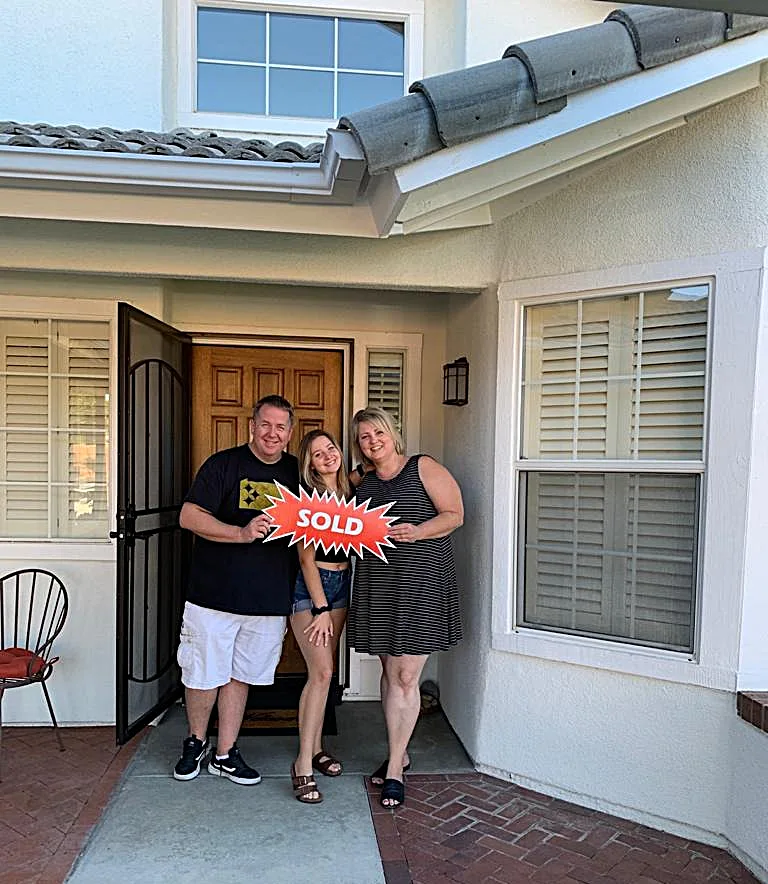
Murrieta Seller Cost Planning With Team Integrity Realty
Laura Holbert and Cheryl Shadden are California real estate brokers with Team Integrity Realty serving Murrieta and Southwest Riverside County. Their seller process includes reviewing the financial side of the transaction before important decisions are made, which can include property valuation, estimated net proceeds, brokerage compensation, expected escrow and title expenses, HOA considerations, existing loans, solar, seller credits, offer comparison, and selling-and-buying coordination. The goal is to help the seller understand how each negotiated term may affect both the transaction and estimated proceeds.
Laura: CA DRE# 01932682, (951) 704-4635. Cheryl: CA DRE# 01932888. Brokerage: Team Integrity Realty, 37290 Los Alamos Rd., Murrieta, CA 92563. We are happy to walk through your property-specific numbers with no pressure.